Friday, October 04, 2019

Hanna Yusuf
Taken entirely from BBC website.
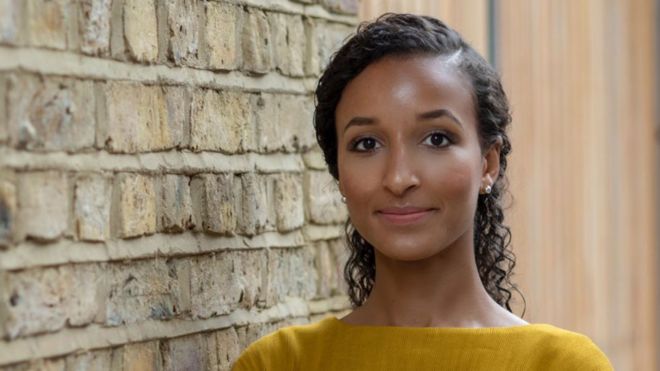
BBC journalist Hanna Yusuf, whose recent work included an investigation into working conditions at Costa Coffee stores, has died aged 27.

The BBC's Fran Unsworth, director of news, said Hanna was a "talented young journalist who was widely admired" and her death was "terrible news".
Her family said they were "deeply saddened and heartbroken" and hoped her legacy "would serve as an inspiration".

She wrote for the BBC News website, and had also worked as a TV news producer.
Hanna spoke six languages, including Somali and Arabic, and worked with, among others, whistleblowers and victims of serious crime.
In 2018, she spoke to Zaynab Hussein, a mother of nine who moved to Leicester in 2003 after escaping violence and instability in Somalia. She told Hanna about the hate crime that left her with life-changing injuries after she was repeatedly run over by a 21-year-old stranger in the street.

Hanna's article about Costa Coffee working conditions revealed employees' complaints alleging managers' refusal to pay for sickness or annual leave, working outside of contracted hours and the retention of tips.
A Costa Coffee spokeswoman said in August that an independent audit had been launched "given the serious nature of the allegations".
Last year she also wrote about why some homeless people chose the streets over emergency shelter despite sub-zero temperatures.

Hanna also covered the story of Shamima Begum, who fled the UK as a 15-year-old schoolgirl to join the Islamic State group in Syria.
While working for the BBC News Channel earlier this year, she broke the story that Ms Begum's family had told Sajid Javid, the home secretary at the time, that they were going to challenge his decision to revoke her UK citizenship.
And later, she successfully secured an interview with Ms Begum's lawyer, who accused UK authorities of failing to protect her from being groomed by IS.
Hanna started at the BBC as a researcher on the News at Six and Ten in May 2017, before moving to the BBC News Channel and News at One and the website.

Before joining the BBC, Hanna wrote for publications including the Guardian, the Independent, the Times, the Muslim News, the Pool and Grazia Magazine.In 2015, she created a video for the Guardian about her decision to wear the hijab at the time, saying "it has nothing to do with oppression. It's a feminist statement", which was picked up by other websites including Teen Vogue and Everyday Feminism.

Appearing on Good Morning Britain after the European Court of Justice's 2017 ruling gave employers the power to ban all political, religious and philosophical symbols at work, Hanna told TV presenters Piers Morgan and Susannah Reid it would "disproportionately affect Muslim women".
Born in Somalia in 1992, she received a Scott Trust bursary to do an MA in newspaper journalism at City, University of London in 2017, following her degree at Queen Mary, University of London.

In a statement, Hanna's family said the death of their "beloved daughter, sister and niece" had come as a shock and asked for privacy.

Friday, September 27, 2019

On Monday, Eells, a mental health professional who held national counseling posts and specialized in resiliency, died by suicide at the Center City apartment where he lived.

Any death can jar a college community, but the suicide of the man who oversaw programs for students designed to help prevent such acts has hit the Ivy League university hard, particularly for those who looked up to him.

“If someone at the highest level of this resource ladder doesn’t have access to the resources they need to feel safe, I really do worry for everyone else,” said Melissa Song, 20, a senior neuroscience student from Tempe, Ariz., and director of Penn Benjamins, a peer counseling organization.

Matt Tomaselli, 21, a junior from Baltimore and member of CogWell, called Eells’ death "absolutely throttling, sad, and disheartening.”
Eells, 52, had worked at Penn only since March. He came from Cornell University, where he oversaw counseling services for about 15 years and helped that school deal with multiple suicides. He was a national figure in college student mental health, often quoted publicly, and gave a TED talk on resiliency in 2015.

“All of us will face times when our heart is broken,” Eells told the audience then. “Resilience is about what we do with that. Can we make art with those pieces?”

His resilient role model, he explained, was his youngest son, born without his right arm. “I watch him every day overcome something,” Eells said.

Eells’ mother told The Inquirer on Monday that he had been struggling with the new job and being away from his wife and three children, still back in Ithaca, N.Y.

Eells was adviser for national “postvention” guidelines for how school campuses should respond after a suicide. The guidelines include providing a stable campus community that encourages communication without sensationalizing suicide, which can make suicide seem more tangible for those who have contemplated it in the past.He had just been elected for a two-year term as president of the Association for University and College Counseling Center Directors, a post he held from 2007 to 2009, and was chair of the Mental Health Section of the American College Health Association in 2014.

“To lose a beloved colleague and friend to suicide amplifies everyone’s levels of shock, disbelief, and sadness,” said Barry A. Schreier, communications director for the association and director of university counseling service at the University of Iowa. “As with any death by suicide, the questions come hard and fast, questions that do not have and may never have answers.”

Tuesday, September 24, 2019


He looked at me helplessly.
My tears came flooding down. "Mao shi, mao shi" "It's ok, it's ok"
Is it time?
Each time I visit him, I feel sad, mixed with deep thoughts.
I can't help the shadows of resentment passing through my thoughts.
"How could my own family NOT feel the way I do now back when I was hospitalised?"

My father's reading glasses.
He had always enjoy reading news, perhaps the only common trait that we share.
The thickness of the dusts shows just how long it has been unused.


Sunday, September 22, 2019

A signal not weakness

Taken entirely from Johann Hari - Ted Talk
For a really long time, I had two mysteries that were hanging over me. I didn't understand them and, to be honest, I was quite afraid to look into them. The first mystery was, I'm 40 years old, and all throughout my lifetime, year after year, serious depression and anxiety have risen, in the United States, in Britain, and across the Western world. And I wanted to understand why. Why is this happening to us? Why is it that with each year that passes, more and more of us are finding it harder to get through the day? And I wanted to understand this because of a more personal mystery. 

When I was a teenager, I remember going to my doctor and explaining that I had this feeling, like pain was leaking out of me. I couldn't control it, I didn't understand why it was happening, I felt quite ashamed of it. And my doctor told me a story that I now realize was well-intentioned, but quite oversimplified. Not totally wrong. My doctor said, "We know why people get like this. Some people just naturally get a chemical imbalance in their heads -- you're clearly one of them. All we need to do is give you some drugs, it will get your chemical balance back to normal." 

So I started taking a drug called Paxil or Seroxat, it's the same thing with different names in different countries. And I felt much better, I got a real boost. But not very long afterwards, this feeling of pain started to come back. So I was given higher and higher doses until, for 13 years, I was taking the maximum possible dose that you're legally allowed to take. And for a lot of those 13 years, and pretty much all the time by the end, I was still in a lot of pain. And I started asking myself, "What's going on here? Because you're doing everything you're told to do by the story that's dominating the culture -- why do you still feel like this?" 

So to get to the bottom of these two mysteries, for a book that I've written I ended up going on a big journey all over the world, I traveled over 40,000 miles. I wanted to sit with the leading experts in the world about what causes depression and anxiety and crucially, what solves them, and people who have come through depression and anxiety and out the other side in all sorts of ways. And I learned a huge amount from the amazing people I got to know along the way. 

But I think at the heart of what I learned is, so far, we have scientific evidence for nine different causes of depression and anxiety. Two of them are indeed in our biology. Your genes can make you more sensitive to these problems, though they don't write your destiny. And there are real brain changes that can happen when you become depressed that can make it harder to get out. But most of the factors that have been proven to cause depression and anxiety are not in our biology. They are factors in the way we live. And once you understand them, it opens up a very different set of solutions that should be offered to people alongside the option of chemical antidepressants. 

For example, if you're lonely, you're more likely to become depressed. If, when you go to work, you don't have any control over your job, you've just got to do what you're told, you're more likely to become depressed. If you very rarely get out into the natural world, you're more likely to become depressed. 

And one thing unites a lot of the causes of depression and anxiety that I learned about. Not all of them, but a lot of them. Everyone here knows you've all got natural physical needs, right? Obviously. You need food, you need water, you need shelter, you need clean air. If I took those things away from you, you'd all be in real trouble, real fast. But at the same time, ever human being has natural psychological needs. You need to feel you belong. You need to feel your life has meaning and purpose. You need to feel that people see you and value you. You need to feel you've got a future that makes sense. And this culture we built is good at lots of things. And many things are better than in the past -- I'm glad to be alive today. But we've been getting less and less good at meeting these deep, underlying psychological needs. And it's not the only thing that's going on, but I think it's the key reason why this crisis keeps rising and rising. And I found this really hard to absorb. I really wrestled with the idea of shifting from thinking of my depression as just a problem in my brain, to one with many causes, including many in the way we're living. 

And it only really began to fall into place for me when one day, I went to interview a South African psychiatrist named Dr. Derek Summerfield. He's a great guy. And Dr. Summerfield happened to be in Cambodia in 2001, when they first introduced chemical antidepressants for people in that country. And the local doctors, the Cambodians, had never heard of these drugs, so they were like, what are they? And he explained. And they said to him, "We don't need them, we've already got antidepressants." And he was like, "What do you mean?" He thought they were going to talk about some kind of herbal remedy, like St. John's Wort, ginkgo biloba, something like that. Instead, they told him a story. 

There was a farmer in their community who worked in the rice fields. And one day, he stood on a land mine left over from the war with the United States, and he got his leg blown off. So they him an artificial leg, and after a while, he went back to work in the rice fields. But apparently, it's super painful to work under water when you've got an artificial limb, and I'm guessing it was pretty traumatic to go back and work in the field where he got blown up. The guy started to cry all day, he refused to get out of bed, he developed all the symptoms of classic depression. The Cambodian doctor said, "This is when we gave him an antidepressant." And Dr. Summerfield said, "What was it?" They explained that they went and sat with him. They listened to him. They realized that his pain made sense -- it was hard for him to see it in the throes of his depression, but actually, it had perfectly understandable causes in his life. One of the doctors, talking to the people in the community, figured, "You know, if we bought this guy a cow, he could become a dairy farmer, he wouldn't be in this position that was screwing him up so much, he wouldn't have to go and work in the rice fields." So they bought him a cow. Within a couple of weeks, his crying stopped, within a month, his depression was gone. They said to doctor Summerfield, "So you see, doctor, that cow, that was an antidepressant, that's what you mean, right?" 

If you'd been raised to think about depression the way I was, and most of the people here were, that sounds like a bad joke, right? "I went to my doctor for an antidepressant, she gave me a cow." But what those Cambodian doctors knew intuitively, based on this individual, unscientific anecdote, is what the leading medical body in the world, the World Health Organization, has been trying to tell us for years, based on the best scientific evidence. 

If you're depressed, if you're anxious, you're not weak, you're not crazy, you're not, in the main, a machine with broken parts. You're a human being with unmet needs. And it's just as important to think here about what those Cambodian doctors and the World Health Organization are not saying. They did not say to this farmer, "Hey, buddy, you need to pull yourself together. It's your job to figure out and fix this problem on your own." On the contrary, what they said is, "We're here as a group to pull together with you, so together, we can figure out and fix this problem." This is what every depressed person needs, and it's what every depressed person deserves. 

This is why one of the leading doctors at the United Nations, in their official statement for World Health Day, couple of years back in 2017, said we need to talk less about chemical imbalances and more about the imbalances in the way we live. Drugs give real relief to some people -- they gave relief to me for a while -- but precisely because this problem goes deeper than their biology, the solutions need to go much deeper, too. 

But when I first learned that, I remember thinking, "OK, I could see all the scientific evidence, I read a huge number of studies, I interviewed a huge number of the experts who were explaining this," but I kept thinking, "How can we possibly do that?" The things that are making us depressed are in most cases more complex than what was going on with this Cambodian farmer. Where do we even begin with that insight? 

But then, in the long journey for my book, all over the world, I kept meeting people who were doing exactly that, from Sydney, to San Francisco, to São Paulo. I kept meeting people who were understanding the deeper causes of depression and anxiety and, as groups, fixing them. Obviously, I can't tell you about all the amazing people I got to know and wrote about, or all of the nine causes of depression and anxiety that I learned about, because they won't let me give a 10-hour TED Talk -- you can complain about that to them. 

But I want to focus on two of the causes and two of the solutions that emerge from them, if that's alright. Here's the first. We are the loneliest society in human history. There was a recent study that asked Americans, "Do you feel like you're no longer close to anyone?" And 39 percent of people said that described them. "No longer close to anyone." In the international measurements of loneliness, Britain and the rest of Europe are just behind the US, in case anyone here is feeling smug. 

I spent a lot of time discussing this with the leading expert in the world on loneliness, an incredible man named professor John Cacioppo, who was at Chicago, and I thought a lot about one question his work poses to us. Professor Cacioppo asked, "Why do we exist? Why are we here, why are we alive?" One key reason is that our ancestors on the savannas of Africa were really good at one thing. They weren't bigger than the animals they took down a lot of the time, they weren't faster than the animals they took down a lot of the time, but they were much better at banding together into groups and cooperating. This was our superpower as a species -- we band together, just like bees evolved to live in a hive, humans evolved to live in a tribe. And we are the first humans ever to disband our tribes. And it is making us feel awful. But it doesn't have to be this way. 

One of the heroes in my book, and in fact, in my life, is a doctor named Sam Everington. He's a general practitioner in a poor part of East London, where I lived for many years. And Sam was really uncomfortable, because he had loads of patients coming to him with terrible depression and anxiety. And like me, he's not opposed to chemical antidepressants, he thinks they give some relief to some people. But he could see two things. Firstly, his patients were depressed and anxious a lot of the time for totally understandable reasons, like loneliness. And secondly, although the drugs were giving some relief to some people, for many people, they didn't solve the problem. The underlying problem. One day, Sam decided to pioneer a different approach. A woman came to his center, his medical center, called Lisa Cunningham. I got to know Lisa later. And Lisa had been shut away in her home with crippling depression and anxiety for seven years. And when she came to Sam's center, she was told, "Don't worry, we'll carry on giving you these drugs, but we're also going to prescribe something else. We're going to prescribe for you to come here to this center twice a week to meet with a group of other depressed and anxious people, not to talk about how miserable you are, but to figure out something meaningful you can all do together so you won't be lonely and you won't feel like life is pointless." 

The first time this group met, Lisa literally started vomiting with anxiety, it was so overwhelming for her. But people rubbed her back, the group started talking, they were like, "What could we do?" These are inner-city, East London people like me, they didn't know anything about gardening. They were like, "Why don't we learn gardening?" There was an area behind the doctors' offices that was just scrubland. "Why don't we make this into a garden?" They started to take books out of the library, started to watch YouTube clips. They started to get their fingers in the soil. They started to learn the rhythms of the seasons. There's a lot of evidence that exposure to the natural world is a really powerful antidepressant. But they started to do something even more important. They started to form a tribe. They started to form a group. They started to care about each other. If one of them didn't show up, the others would go looking for them -- "Are you OK?" Help them figure out what was troubling them that day. The way Lisa put it to me, "As the garden began to bloom, we began to bloom." 

This approach is called social prescribing, it's spreading all over Europe. And there's a small, but growing body of evidence suggesting it can produce real and meaningful falls in depression and anxiety. 

And one day, I remember standing in the garden that Lisa and her once-depressed friends had built -- it's a really beautiful garden -- and having this thought, it's very much inspired by a guy called professor Hugh Mackay in Australia. I was thinking, so often when people feel down in this culture, what we say to them -- I'm sure everyone here said it, I have -- we say, "You just need to be you, be yourself." And I've realized, actually, what we should say to people is, "Don't be you. Don't be yourself. Be us, be we. Be part of a group." 

The solution to these problems does not lie in drawing more and more on your resources as an isolated individual -- that's partly what got us in this crisis. It lies on reconnecting with something bigger than you. 

And that really connects to one of the other causes of depression and anxiety that I wanted to talk to you about. So everyone knows junk food has taken over our diets and made us physically sick. I don't say that with any sense of superiority, I literally came to give this talk from McDonald's. I saw all of you eating that healthy TED breakfast, I was like no way. But just like junk food has taken over our diets and made us physically sick, a kind of junk values have taken over our minds and made us mentally sick. For thousands of years, philosophers have said, if you think life is about money, and status and showing off, you're going to feel like crap. That's not an exact quote from Schopenhauer, but that is the gist of what he said. 

But weirdly, hardy anyone had scientifically investigated this, until a truly extraordinary person I got to know, named professor Tim Kasser, who's at Knox College in Illinois, and he's been researching this for about 30 years now. And his research suggests several really important things. Firstly, the more you believe you can buy and display your way out of sadness, and into a good life, the more likely you are to become depressed and anxious. And secondly, as a society, we have become much more driven by these beliefs. All throughout my lifetime, under the weight of advertising and Instagram and everything like them. 

And as I thought about this, I realized it's like we've all been fed since birth, a kind of KFC for the soul. We've been trained to look for happiness in all the wrong places, and just like junk food doesn't meet your nutritional needs and actually makes you feel terrible, junk values don't meet your psychological needs, and they take you away from a good life. But when I first spent time with professor Kasser and I was learning all this, I felt a really weird mixture of emotions. Because on the one hand, I found this really challenging. I could see how often in my own life, when I felt down, I tried to remedy it with some kind of show-offy, grand external solution. And I could see why that did not work well for me. I also thought, isn't this kind of obvious? Isn't this almost like banal, right? If I said to everyone here, none of you are going to lie on your deathbed and think about all the shoes you bought and all the retweets you got, you're going to think about moments of love, meaning and connection in your life. I think that seems almost like a cliché. But I kept talking to professor Kasser and saying, "Why am I feeling this strange doubleness?" And he said, "At some level, we all know these things. But in this culture, we don't live by them." We know them so well they've become clichés, but we don't live by them. I kept asking why, why would we know something so profound, but not live by it? And after a while, professor Kasser said to me, "Because we live in a machine that is designed to get us to neglect what is important about life." I had to really think about that. "Because we live in a machine that is designed to get us to neglect what is important about life." 

And professor Kasser wanted to figure out if we can disrupt that machine. He's done loads of research into this; I'll tell you about one example, and I really urge everyone here to try this with their friends and family. With a guy called Nathan Dungan, he got a group of teenagers and adults to come together for a series of sessions over a period of time, to meet up. And part of the point of the group was to get people to think about a moment in their life they had actually found meaning and purpose. For different people, it was different things. For some people, it was playing music, writing, helping someone -- I'm sure everyone here can picture something, right? And part of the point of the group was to get people to ask, "OK, how could you dedicate more of your life to pursuing these moments of meaning and purpose, and less to, I don't know, buying crap you don't need, putting it on social media and trying to get people to go, 'OMG, so jealous!'" 

And what they found was, just having these meetings, it was like a kind of Alcoholics Anonymous for consumerism, right? Getting people to have these meetings, articulate these values, determine to act on them and check in with each other, led to a marked shift in people's values. It took them away from this hurricane of depression-generating messages training us to seek happiness in the wrong places, and towards more meaningful and nourishing values that lift us out of depression. 

But with all the solutions that I saw and have written about, and many I can't talk about here, I kept thinking, you know: Why did it take me so long to see these insights? Because when you explain them to people -- some of them are more complicated, but not all -- when you explain this to people, it's not like rocket science, right? At some level, we already know these things. Why do we find it so hard to understand? I think there's many reasons. But I think one reason is that we have to change our understanding of what depression and anxiety actually are. There are very real biological contributions to depression and anxiety. But if we allow the biology to become the whole picture, as I did for so long, as I would argue our culture has done pretty much most of my life, what we're implicitly saying to people is, and this isn't anyone's intention, but what we're implicitly saying to people is, "Your pain doesn't mean anything. It's just a malfunction. It's like a glitch in a computer program, it's just a wiring problem in your head." But I was only able to start changing my life when I realized your depression is not a malfunction. It's a signal. Your depression is a signal. It's telling you something. 

We feel this way for reasons, and they can be hard to see in the throes of depression -- I understand that really well from personal experience. But with the right help, we can understand these problems and we can fix these problems together. But to do that, the very first step is we have to stop insulting these signals by saying they're a sign of weakness, or madness or purely biological, except for a tiny number of people. We need to start listening to these signals, because they're telling us something we really need to hear. It's only when we truly listen to these signals, and we honor these signals and respect these signals, that we're going to begin to see the liberating, nourishing, deeper solutions. The cows that are waiting all around us. 

Thank you. 

Wednesday, September 18, 2019

These stories leave an impression.
Taken entirely from this blog, a psychologist.

Case study One
She’s a teacher, first came to us being depressed, presented with a complete negative outlook, lacking drives and interests, having crying episodes, and not being able to teach.
After few months of treatments, she recently called up and requested for a letter written to the ministry of education, to say that she’s recovered. During the phone call, she said she’s still regular with med, but now she has no more crying episodes, and her mood is good generally.

Coincidentally one day when she was in school and called up to check whether the report was ready, the school principal walked past her, and requested to speak to me. The principal asked whether the family has contacted us regarding the patient’s condition (negative). She said although patient is no longer crying and depressed now, she has been doing things completely out of order.

The headmistress said patient has organized a basketball competition completely by her own, without the school’s permission but under its name. She also brought a few of her students out for day trip, and only sent them home past midnight. When she meets someone new, she talks a lot, telling a lot of private details about herself. Sometimes she feels tired and will just sleep in the school storeroom. She also refused to go home after the basketball event, stayed at the court and fell asleep there at 3am when she was found by the family. She tries to spend all her time away from home, refusing to go home. She promises to anything and everything others ask her to do, and fail to keep her promises. Others can’t criticize anything about her, she thinks she’s perfect, best of the best, so whoever criticizing her, she becomes very argumentative and defensive, which is why she argued with and shouted at the principals.

Case study Two
I recently called a sister of a new patient to check how the patient had been doing with the medicine and whether his state had improved, and came to know that the patient hung himself that very morning.

I’m not sure if I’m too sensitive, but I’ve received this kind of news considerably frequent in my job, the sister just didn’t sound sorrow (of course some people hide their emotions very well). In fact she later said that it was a relief not just for the patient, but also for the family.

The patient has 4 siblings who are all married with children. Their parents have passed away for few years. He was the only single and he lived on his own. Though the sister went to see him thrice per day, bringing him food and taking care of him. He had suffered from depression for many years, also done ECT quite a few times. The sister always did her best to help him. She said some siblings had given up on him, but she wouldn’t.


Now that he is gone, she just felt a weight off her shoulders. Then she started to wonder if she had done wrong all these years.

Case study Three
He became a millionaire in his early 30s, although primarily an insurance agent, he was known with his skills in investing. He had a wife and a daughter. They went on holidays all over the world every year.
In his mid thirties, he got depressed and suicidal, due to stress of work and some other problems. He attempted suicide several times, buying ropes to hang himself, overdosing himself on drugs but was always found early enough to save his life. Perhaps this wasn’t how his life meant to be.

His family took him to temples, hoping that the power of religion could help him to recover. They were told that the money he’d earned was “dirty money” (money obtained unlawfully or immorally). So by instructions, he went to China and donated almost all his money to the temples. At this point, the wife left him. He got even more depressed, he didn’t recover donating his money away.

Recommended by friends, he seek professional help and came to see psychiatrists. After weeks of medications and a course of ECTs, he got better. On the following years, his condition was maintained with medication. He would come to see doctor once he felt unwell. He rebuilt his career and became wealthy again. He even supported his ex-wife financially, although he also soon got married with another woman. Over the years he had had another 2 courses of ECT at times of difficulty.

He even went on press to talk about mental illness. He shared his stories including his suicidal attempts and helped raising the mental health awareness in the public, telling others not to discriminate them, but also encouraging those with mental illness not to give up, motivating them to seek help actively, telling them it’s recoverable, and they have the opportunities to lead a normal and fulfilling life just like him and anyone else!
He wasn’t just a normal successful insurance agent, but also one of the most motivating and inspiring speakers in the town.


Years later, in his mid 40s, he got into some troubles. This time he didn’t come back to see doctor, he checked himself in a hotel, jumped off from the window of the washroom in his hotel room. There ended his colourful short life.

Case study Four
Sometimes I think we wouldn’t even know if and when a patient ends his or her life, unless we read it from the news or the family member contacts us.

Yes family member does contact us and tell us about the news when it happens, not all the time, but they do. And one main reason they usually call us and inform us regarding the patient’s suicide, is that they want to question us.

“He’s been taking the medicine prescribed by the doctor regularly, how did this still happen?”
“How come the medicine he was prescribed with wasn’t helping?”
“The last time when she went to your clinic, did doctor say anything? Did she say anything?”

Yes, I understand this and that (sometimes I think they just need someone or something to point their fingers at). But we’re only an outpatient clinic, all we can do is not much, though we do try our best including using phone calls or emails to reach and support them in their daily lives.

The sister was in tears when she called. The last time I heard from the sister was almost a year ago. She said he’s gone, their brother, the six sisters’ one and only brother. He jumped off from the balcony of an apartment.
They still couldn’t accept the truth.
And no, she didn’t call to question us, to blame it on us. She called to ask if she and the other sisters should come for an appointment as they are all feeling really low and depressed.
I finally went to this support group.
Among the discussion, one participant said that 'being alive today is a victory I'm proud of''.
 Many others nodded in agreement.
I had to voice out.
"I feel differently. I'm still here because I'm not allowed to go before clearing off my karma debt".

One of the participants reminded me of LK.
Her mannerism and facial features bear a resemblance.
I can't help but wonder the accuracy of face reading.

I wonder how are the people in my 'tribe' are doing.
Are they still alive? Coping well?

Thursday, September 05, 2019

I'm both worried and impressed. Below are writings of an 8-year-old.
My parents are always saying that the world doesn’t revolve around me but sometimes I wonder if it actually does. 
When I was a little kid, I saw that movie about a man whose whole life is secretly being filmed for a tv show. This guy is famous all over the world, but he doesn’t know it!
Well, ever since I saw that movie, I’ve kind of figured out that the same thing is probably happening to me!
At first, I was annoyed that my life was being broadcast without my permission, but I realised that if millions of people are tuning in every day to see what I’m up to, that’s actually kind of cool!
Sometimes I worry that my life is too boring to be its own television show so I try to do something entertaining every now and then, to give the people who are watching a good chuckle.
I also try to let my audience know that I’m in on the secret. If it’s live, then there’s gotta be commercial breaks. I figure they must run the ads where I’m in the bathroom. So, I always make a big entrance after I finish up in there.

Sometimes I wonder how much of my life is rigged and how much is real because half the things that happened to me seem so ridiculous! 
Every once in a while I wonder if the people in my life are who they seem to be or if they’re really actors. If they are actors, I hope the kid who plays my friend Rawley gets an award because he’s doing a great job pretending to be a doofus. And if my brother Rodrick is actually just some guy getting paid to act like a jerk. But if my parents are actors, then that’s just wrong. I’ve made a lot of Mother’s and Father’s Day cards over the years. If this is all a show, then I deserve to get paid for my time and effort.
And speaking of getting paid, I’ll bet my real parents are set for life, thanks to me!
But I’m doing everything I can to make sure I can cash in later. In most TV shows, the main character has a catchphrase that they say at least once per episode. So, I’ve come up with one on my own, and I drop it into my conversation every once in a while.

Tuesday, September 03, 2019

Had a really bad family argument.
I was accused of using money that isn't mine.
To put it bluntly, they accuse me of stealing.

In this episode, my brother hurt me deeply.
I have always made excuse for his bad behaviour.
But this time, he gaslighted me, accusing me of being rude on one occasion.

Anyway, this has happened before.
Too many times.
Hence, I do feel very suicidal.

I just want to die each time I think of my family.
How do I detach myself from this toxicity?

Thursday, August 29, 2019

Today is the 1st day of school for the returning students.
1st day in the new building for all of us.
The fresh smell of paint invites both excitement and anxiety for us, the staff, torn between the workload and the new hopeful.
But the faces of the students remind us all why we are doing this.
We are all smiling in endearment.

The younger ones are so cute.
All of the adults, watched in amusement when the little ones entered their new classrooms, for the first time.
"There's some sort of magic in this moment," I thought.

It was a different atmosphere in the admissions office.
A young boy is crying, not wanting to take the placement test.
"Oh dear, he must have had a bad experience," I thought.
His mother tried to console him, feeling quite exasperated herself, " Mummy work so hard so that you can study in a good place !"

My heart was heavy for both the boy and mummy.

end
********************************
Happiness....


Tuesday, August 27, 2019

Taken entirely from The Straits Times,25 Aug 2019 by Wong Kim Hoh Senior Writer kimhoh@sph.com.sg

Grief-stricken, Madam May Chng looked at Jarod as he lay, hooked to several tubes, in the intensive care unit of Changi General Hospital.
“I was just stroking his hand; I just kept sayang- ing him,” she says, using the Malay word for showing deep love and affection. “Each time I touched him, I’d say sorry and asked him if I could have been a better mother.”

Even though he was unconscious, her 18-year-old son obviously heard her because tears rolled down his cheeks.

“I knew then my son didn’t want to go, didn’t want to die. He just didn’t know how to stop the pain and how to tell us,” says the former science teacher.
Jarod Cheah died on April 2, 2013, 16 hours after he hanged himself.
By all accounts a goofy and bubbly teen, what he did enveloped his friends and loved ones in a tidal wave of shock and grief.

“He knows we love him, are supportive and reasonable. I still can’t understand why. I just know that all must have been overwhelming for him that day,” says Madam Chng, 56, who still uses the present tense when talking about the younger of her two sons.

More than six years have passed but she is still trying to come to terms with her loss.
“You are only the third person I have talked to about this. I have attended child bereavement support sessions but I could only say Jarod took his own life, not talk about what happened,” she says.
Madam Chng now wants to more than move on; she wants to help prevent others, especially the young, from doing what Jarod did.

Early this month, she joined Brahm Centre to take charge of its newly launched Assist Line for Youths And Parents.
Founded by former technopreneur Angie Chew, Brahm Centre is a secular outfit which conducts courses on mindfulness and offers health education as well as emotional and mental support.

The helpline comes in the wake of a recent report in The Straits Times that the number of teenage boys who took their own lives hit a record high of 19 last year, the most since tracking of suicide figures began in 1991.
Suicide, according to the Samaritans of Singapore, is the leading cause of death among young people aged between 10 and 29. Last year, 94 of them took their own lives.

“Young people may think their pain ends when they end their life. But the pain is multiplied and intensified in the lives of many others who have to carry it for the rest of their lives,” she says, adding that both she and her husband, a human resource professional, became suicidal and wrestled with depression after Jarod’s death.
The family moved out of their old home after the tragedy because it held too many painful memories.

In their new condo in the east, Madam Chng has set up a corner for her lost son. The walls in this part of the house are painted green, Jarod’s favourite colour. On one hangs a Jshape montage of images, put together by his cousins.
A soft-spoken and dignified woman, Madam Chng sheds tears and smiles in equal measure as she talks about Jarod, whom she describes as a witty and creative soul.

She and her husband – both graduates of the National University of Singapore – were fairly easy-going parents.
“We didn’t give them too much pressure. Even though I was in education, I believed that students should learn something new, not just how to take tests and examinations,” she says.
A generally happy child, Jarod hit a rough patch when he had to move to a new school because he did not do well in his Primary School Leaving Examination (PSLE).

He was bullied.
“He was picked on because he spoke with an accent, probably from watching too much Sesame Street. He also liked to tell people what he thought, especially when he felt they were not doing things right,” she says with a grimace.
“Some of his classmates made nasty comments and ostracised him. I wanted to tell his teacher many times but he begged me not to,” she says, adding that schools could do more to tackle the issue of bullying.

One day, he told her that he was so miserable that he could not breathe. Madam Chng and her husband then decided to move to Hong Kong, where he had been offered a job.
In Hong Kong, Jarod settled well into life at the Australian International School. He made new friends, dated and pursued his interest in music, especially the guitar.
After a couple of years, Madam Chng returned with her two sons to Singapore.

“My elder son had to come back for national service,” she says.
Although she did not ask him, Jarod seemed happy enough to return in 2010 too. By then, the accomplished guitarist was sure he wanted a career in music. He successfully auditioned for a place, via the music track, in an arts school.
He found himself a girlfriend he really liked, but, like many teen relationships, it was at times rocky and tempestuous.
Jarod’s best friend Kevin (not his real name) wrote a chapter on him for Bend Not Break: Learning From Loss published in 2016 by Brahm Centre. Authored by surgeon Peter Mack, the book – using Jarod’s story – explores youth depression and suicide.

In his essay, Kevin describes his friend as a naturally merry soul, who “had a way of putting people at ease and feeling comfortable with themselves”.
But Jarod, he writes, was also not averse to displaying anger.
“At times, he would punch the wall or glower to himself. However, such behaviours were not really indicative of there being anything wrong, as far as I knew.”

The book also contained an essay by Jonathan Cheah, Madam Chng’s elder son, chronicling his grief over his brother’s death.
Now a 27-year-old lawyer, Mr Cheah wonders if his brother suffered from depression.
“To my mind, my brother was an ordinary teenager who lived a happy life or at least he appeared to,” he wrote.
“He went to a school that, in my opinion, not only catered to his interests but also provided him with an intellectually stimulating and nurturing environment. He had many loving friends at school and seemed very happy to be there... So what shook him recently?”
Madam Chng says she has not read the essays.

“I just can’t bring myself to,” she says.
Jarod took his own life on a Monday, the day after Easter Sunday.
“We had a wonderful weekend,” she recalls, adding that the family went to watch Django Unchained, a violent Western by film-maker Quentin Tarantino.

“Jarod was holding my hand and I remember telling him: ‘So clammy’. My elder would never be seen in public holding my hand,” she says, smiling at the recollection.
The day which changed her life forever began normally enough. As she dropped him off at his school, she said: “Good night, baby.”
Bemused by her inexplicable gaffe, she laughed and corrected herself: “I mean, have a good day, baby. Love you.”

Because he had to finish an important school project, Jarod did not join his family when they went out for dinner that night.
She knew he had been under stress because he really wanted to do well in his studies.
On their return, he came out of his room to greet them.
“His father had prepared dinner for him before we went out. I asked him if he had eaten. He said no and that he had work to do” she says.

Tearing, she adds: “I always asked him if he had eaten and how his meals were, but I seldom asked how he was feeling.”
Jarod, she continues, went inside his room and l ocked the door, which he did not normally do.
Madam Chng went to take a shower but told her husband to remind Jarod to have his meal.
Her husband did, shortly after, but thought nothing was amiss when his son did not respond.
When she came out of t he shower, Madam Chng knocked on his door and then sent a text message to Jarod.
Greeted by silence, she and her elder son forced open the door to be confronted by a harrowing sight.
She remembers screaming and holding on to her unconscious son’s feet while his brother performed cardiopulmonary resuscitation while waiting for the ambulance to arrive.

The month following Jarod’s death was pure hell for his family.
“I couldn’t function at all. I couldn’t breathe. I had flashbacks and panic attacks,” says Madam Chng.
Jonathan left for England to study law. “He just wanted to be away for a while because we were so sad.”
Her husband sought counselling but not her. She spent the next 12 months in a deep funk, holed up in a darkened room in their apartment in Hong Kong, where her husband was still working.
She read up on different religions.

“I just wanted to know where he was and how to get to him,” she says with a wan smile.
When she and her husband returned to Singapore, she went back to work as a vice-principal in a primary school for three years until 2017.
“I just wanted to throw myself into work to forget the past,” she says.
Because she had not properly processed her grief, it took very little to trigger bouts of weeping.
By then, Jonathan had returned to sit his Bar exams. Because she wanted to be well enough to take care of him, she started seeing a counsellor.

It helped, and led to other things: attending child bereavement support groups, water-colour painting classes, community gardening sessions and mindfulness workshops.
“I’m not completely fine but I decided I needed to do something other than focus on rumination,” says Madam Chng, who started reading up on teen suicides and how countries like the United States and Canada are tackling the issue.

Inspired by a Sunday Times article earlier this year about how Ms Chew gave up a high-flying tech career to start Brahm Centre, she applied to join the outfit.
Ms Chew assigned her to start the new helpline for youth and parents, and paired her with a psychologist and a researcher.
Speaking through tears, Madam Chng implores young people who are troubled to seek help.

“You are not alone. We all have issues. You do not have weakness of character if you seek help. And mental issues are not taboo. When we are not well, we go to a doctor to get better, don’t we?”
Parents should be more vigilant; they cannot be too dismissive, she adds.
“The world they live in is very different from ours. It is much more fast-paced and complex.”
With a sad smile, she recalls how she and Jarod once lay on the grass in their garden, looking up at the stars in the sky.
“There were some news reports about teen suicide and I made him promise that he would never do such a thing because he and his brother were the best things that had happened to me.

“He said: ‘I promise’.”
Sunday, August 18, 2019

Taken entirely from www.indiegogo.com/projects/1000-days
On October 16, 2014, Sangeeta Mahajan lost her only son to suicide…on that very same day, she started to write a blog: a blog she wrote every day for…1000 Days 

Single message of the film - you are not alone

Single action - For those of us who need to speak, please speak.
For those who are in a position to listen, please listen.
Please listen to understand, knowing that all of us could be on either side of the table at different times in our lives.

In the world of social media never have we been so connected and never have we been so alone. We hope this film will raise awareness of the possibility of a kinder way of being and the knowledge that caring and human contact may save a life.

If you can be anything be Kind.
Saagar
The meaning of His name is ‘OCEAN’.
When the tiny droplets of rain fell on my face,
I could feel his presence in the water
that has risen from the oceans and now
came to me with love and gentleness.

Saagar, a linguist par excellence, had just completed his Second year at Durham University, reading French and Arabic. French, because he loved everything French, and Arabic because he wanted to challenge himself and learn a language from scratch. Aside from that, he was a passionate drummer, a fast-bowler and he loved to make people laugh. It came easy as he was a fabulous mimic. Be it the mannerism of a stereotypical teenager or the man at the Chinese takeaway, his effortless and accurate impressions of all kinds of people often had us in splits. His friendships were solid. He gave the best hugs. At the age of 20, he was diagnosed with Bipolar disorder at a well-reputed Mental Health hospital in South London. Initially, he responded well to treatment, but then the services failed him. Within 10 weeks of being diagnosed, he ended his own life.

He was my beautiful son. His death was not just a tragedy for our family but a huge loss to society as he had so much to offer. So much love, talent and compassion. His death opened my eyes to the fact that no one is immune to suicide. That the medical profession fails many young people in difficulty through lack of good leadership, true compassion, understanding and expertise. That the society can be blind to young suicide because it’s a taboo, shrouded in deep darkness.

The day Saagar died, my life was cleaved into ‘Before’ and ‘After’. I wondered, “If I didn’t know, how many people don’t know that this travesty can befall their friends and families?” I felt compelled to do something. I started writing a blog called Kidsaregifts. I wrote every day for a thousand days, sharing my learning, helpful resources, grief, healing and other stories. The blog has formed a supportive community around itself. I also wrote articles for the Telegraph, the Guardian and the Huffington Post. I found it to be an effective way of raising awareness and giving a voice to other families like ours.

Saagar’s friends have been a constant source of joy and strength for us. They have also been ambassadors of good mental health in their communities. Saagar lives in our hearts. His school has honoured him in many ways, one of which is by installing a bench on the school grounds in his memory. We believe that Saagar’s death was preventable. We believe that many deaths by suicide are preventable.

Friday, August 16, 2019

MY STRUGGLES WITH DEPRESSION
 REAL-LIFE STORY. By Maxy Chan - A Student Living with Depression ;

I was diagnosed with depression in early 2016. Three months before the diagnosis, I experienced severe chest pain, frequent migraine, I couldn’t feel whether I am full or hungry. I couldn’t sleep almost after 3am every day. There were too many thoughts running in my head. I need to shout in order to release the uncomfortable feelings that have been trapped in my body. I was shocked to notice I cried almost three times every day, during my classes in campus. I don’t know why I was sad.

I requested my parents to bring me to mental health professionals. My father refused at the first time, worrying that I may leave a bad record in my future career. When my symptoms were getting serious, I started receiving sessions from clinical psychologist, hypnotherapist, and psychiatrist. With psychiatrist’s letter, I took deferment of two semesters to rest at home.
I was prescribed Olenza, Xanax, Zoloft, Prazovex, and Prozac. My parents brought me to the park every evening, to get near to nature, and encouraged me to exercise. I gained 7-8kgs in the next few months. Depression can also cause obvious weight gain or weight loss.

Simultaneously, I started developed symptoms of OCD (Obsessive Compulsive Disorder). I kept washing hands, I needed to make more than 15 pumps of hand soap every time I wash my hands. I also wanted to repeat every word I said to family. I kept repeating the route that I just walked because I think I didn’t do it well. Suicidal thoughts came every often. I made a few attempts without success. It was totally heart-breaking, overwhelming and devastating. I needed to lay down at least half an hour to let my thoughts run, so that I can feel at ease to proceed my daily routines. because the cause of a depression can contain factors from biology, psychology, and social categories.

However, throughout my counselling sessions, I realized I have been suppressing my emotions for more than 6 years since I was a teenager. I never share my secrets to friends or family. I didn’t allow myself to feel anger, sad, and many other negative emotions because I think it is not polite to be angry. I also didn’t want to express myself when I feel happy, because I was worried there is someone around me who may be going through an unfortunate event at the same time. I have developed a habit to conceal my emotions through the years.
Today, I am still taking Prozac under the advice of psychiatrist. In 2017, I tried to make changes in my life to actively join university clubs and events. I experienced seeing a movie in cinema unaccompanied. I went to a picnic with friends. I organized my first solo piano recital.

I went to a pub with siblings. I participated in short marathons to motivate myself to exercise. I participated in a local “Go Bald” event to raise awareness in childhood cancer. I organized a fundraising recital to collect donations for UNICEF Malaysia. Recently, I just had my first ice skating experience.
I don’t think I have fully recovered from my mental illness.
 But I think that embracing the condition I am facing, and be more open in mind is already part of the recovery journey. I am now pursuing my bachelor’s degree in music at a local tertiary education institution.
By Maxy Chan

Tuesday, August 13, 2019

I was on the escalator going up.
I saw a familiar face. He was also on the escalator, going down.
Our eyes locked.
We had the same reaction.
Both of us smiled at each other.
But I can't pint point where I know him.
"Hei, mana kerja sekarang?"
"Hey, where are you working now?"
He named my old workplace.
Ahh...
We just waved at each other as we alight the escalator, from opposite directions.

What a pleasant 5 seconds.

"Swing Kids" - great movie.
What is the use of ideologies if it damages more than its goodness it preaches?

Friday, August 09, 2019


A Hong Kong teacher was driven to suicide partly by a school principal’s management style and poor working environment, an independent inquiry has found.

The tragic death of Lam Lai-tong shocked the city in March, and the panel set up to investigate the circumstances surrounding it laid much of the blame squarely at the feet of Law Yuen-yee, the principal of the TWGHs Leo Tung-Hai Lee Primary School in Tin Shui Wai.

Law was sacked on Thursday after the inquiry described her management style as “unideal”, and outlined her lack of respect for staff and a failure to fully consult them about new policies.

Lam, a Chinese-language teacher and librarian, fell to her death at the school, and family members had said earlier that the 48-year-old, who had worked there for more than 20 years, had been under pressure and made to work while unwell shortly before she died.
I gain a lot of wisdom following this famil#adamsautismfamily on Facebook.

Don’t blame yourself your child has Autism. It’s not your fault.
Don’t blame your child for having Autism. He/she did not ask for it.
Having Autism was never a choice. How we live with Autism is.
It’s ok to feel sad, lost, worried, even angry every now and then. You are only human.
Frustration and exhaustion will break you down. There are days you feel like giving up and ask “why me”.
But in time, trust yourself to grow, relearn, and when you wholeheartedly embrace the extraordinary, you will find the greatest love of all. 
by Iman Wan 

Sunday, August 04, 2019

Taken entirely from the Logical Indian, by Raashi Takran.
It was around 8:45 pm when the bell rang. I was in my room. I could vaguely hear my dad as he rushed out of the house. Confused, I called him. After a few seconds, he picked up and I realized that he was sobbing. I’d never seen my dad cry. And then, he said something that will haunt me forever – “Raghav is gone.”

My little brother was only 18.

My brother, Raghav was the kind of person who knew when to slow down in life and live – truly live a moment, not just with his eyes but his soul. Be it a sunset, the night sky, a butterfly or a rainbow, he would give due credit to these little things we often take for granted. I don’t know, maybe he somehow knew his days here were numbered so he wanted to take in every detail, embrace it.

He was a nature enthusiast, people who knew him would agree. Often, I would find him out in the balcony looking up at the sky. “Sunsets give me hope” he used to say. “why?” I’d ask, a little confused.

“Because they are a testament that nothing truly lasts, be it good days or bad. So if you’ve had a bad day, the sun shall take it away as it sets and it’ll rise again tomorrow, giving you a fresh chance at life and I think there’s hope in that.” His words have stayed with me.

My brother passed away on 6th January, 2019. We lost him to suicide. He was only 18 and in a matter of seconds, he was gone. Just like that. Till today we don’t know what happened and what led to the situation that pushed him to take such an extreme step. In his last days, he seemed a little restless and depressed and never let it show. He never said to us about it, how would we know?

He’s taught me this-
Life will get too much for you sometimes, you will have days that are truly crappy. There will be at least two bad days for a good one because that’s life. It’s not a bed of roses but it’ll get better. Whatever you’re dealing with, it’s real. You’re not crazy, you’re not overreacting, you’re not paranoid and most importantly, you’re not alone! Don’t let anyone tell you otherwise. You just have to reach out.

Wow.